Thursday, October 06, 2011

Check-ride Part 2

Surely that's not rain I hear?  What do you mean overcast?

It was tough to wake early, expecting another glorious Colorado morning, anticipating the termination of all this check-ride stress in the very near term... only to find it dark, cold and generally crappy outside!
The oral exam would proceed, no question.  Unfortunately, with visibility of a quarter mile, it was not looking good for the flight portion of my check-ride.

FAA Examiner, Bev Cameron and I met promptly at 8am.  We had the FBO pretty much to ourselves as we set up in a small teaching room and began "the check-ride".

Checking the student pilot:
Firstly, she checked IACRA to make sure I was registered and endorsed.
I presented appropriate ID, then my logbook, for endorsements and student pilot minimum flying requirements.
She looked at the original copy of the written exam certificate, and my medical certificate.
I paid her and we discussed briefly the procedure from this point forward.

Checking the aircraft was airworthy:
We went over the documents required to be in the aircraft fairly quickly.
Then proceeded to open the aircraft log book and review maintenance records and AD compliance for airworthiness.
Bev didn't just want to see me find the latest inspection entries, she asked questions along the lines of how often the inspection is required, who can perform it, where and why it is found under different sections of the log.
(Did you know that the 100 hour inspection, which is required on all planes "for hire" is not a requirement for a check-ride?  I did... and it was asked.)
We looked at my the weight and balance calculations and the applicable performance charts in the POH.

Cross Country prep:
After reviewing the flight plan calculations, route and weather forecast, I was asked questions about my planning and research.

I needed to be able to explain the weather info that I had and how long it was good for.  Including understanding notams and TFRs.
Why this route in particular?  Why these check points?  What could I do if not sure where I was, at any given time?  What would I do if weather appeared to change and how could I get updates en-route?  What were legal weather minimums and what were my personal comfort minimums for flying?

There were multiple questions about different areas and symbols on the sectional chart and we spent considerable time here.  I needed to identify airspace, with particular attention given to Class E (our area). Also military airways and operating areas, what the different methods of navigation were and more.

Safety questions were prominent and most questions were framed around real life scenarios.

Density altitude was big discussion - no surprise, since I got a density altitude question wrong on the written. (She was quick to see if I had studied and improved since learning it was a weakness.)  Honestly... I could still be better with this!  Bev was very good at taking a concept that I had learned but could improve on, and giving me different perspective, to further increase my level of understanding.

She asked me some performance and limitations questions related information found in the POH.  Eg:  If it was 100 degrees outside, the aircraft had full fuel and me as pilot, there was a 50' obstacle at the end of the runway and the runway was 1500' long... could I take off (safely)?  What could I do to improve the situation?

Other questions:
Where do I start?!

We talked extensively about the classes of airspace, minimums for VFR, and communication requirements prior to entering and while flying in different classes of airspace.

Equipment Failure/malfunction:  I was asked what would I do in the event of a complete electrical failure.  No cell phone/text messaging capabilities.  Is it an emergency?  Where should I land?  Where could I land?  How do I communicate with ATC?
Flap failure?
Engine failure on take off?  At what point and under what conditions do I abort and not?

What does the Cessna 152 use for heating, cooling, de-icing?

What equipment do I specifically need for Class B airspace?  What will I be asked to do with it?

Causes, symptoms and action needed with various hypoxia conditions.  She targeted carbon monoxide, low oxygen caused by high altitude flying.
Other pilot safety issues... stress, alcohol, drugs, sleep deprivation, were all touched on too.

There were questions about the limitations and privileges of having a private pilot license, including night flying, carrying passengers and accepting compensation.  She asked me about the various requirements for maintaining currency.

When and who to contact when lost, encountering IFR conditions, or needing help of any kind during flight?


Bev gave me this gem of advice:   
If the controller at the other end of the radio, asks you if you are declaring an emergency, this is your cue to do so.  Once you do declare an emergency, you will be given your very own controller to work with and that person can then assist you to a higher degree. 


We took a couple of bathroom/coffee/snack/weather-checking breaks and there was some chit chat along the way.  Four hours later (a good three of which were exam questions) an exhausted me, walked out of that teaching room, one step closer to a private pilot license.
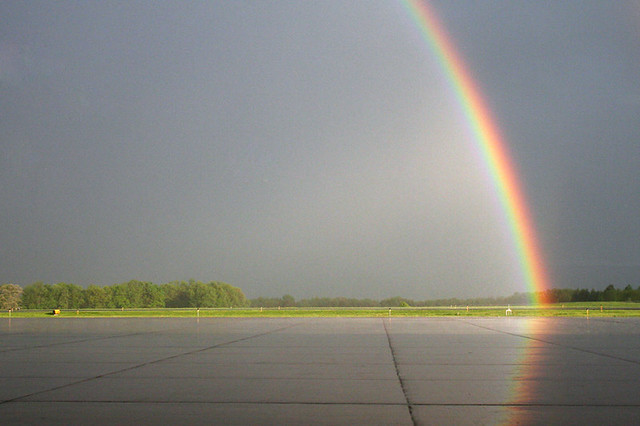

I am not afraid to admit that a big part of me was relieved that the weather was even crappier by this time, and there was no way we would be doing the flight portion, that day.  The small part of me that was still kind of hoping to have this whole thing over in one day, was taking a second seat to nausea.  (I knew that granola bar was risky!)

It was time to try for that elusive sleep, once again.


Wednesday, October 05, 2011

Check-ride Part 1

The day had almost arrived.

Two weeks prior, I requested several names from Air West Flight Center and had been advised that as a personality, Bev Cameron would likely be a good fit for me.  I find recommendations are often the best way to go, especially if they come from someone you know and trust.  Thanks Lori!

I also took a little time to see if I could Google Bev, before calling her.  Researching a buyer or seller that I intend to work with in a real estate transaction has become a habit for me, so it makes sense to carry it over into other areas of my life too.  The internet is a fabulous resource and one that should be taken advantage of.  I often dig up information such as the tax payer address (where they really live), job titles, blogs and other things published, charitable contributions, memberships in organizations, notable achievements, prison records, licenses held and so much more.  In the past I have had clients who have dug up even more about the other people involved in a deal. Yes... you would be surprised what is public knowledge - or horrified!

Back to Bev.  
I found her to be local, a very experienced and capable pilot, and a note-worthy teacher.  That's all I need to know!  

From the first phone call, which she immediately picked up, I found Bev to be easy to talk to and a person who was well practiced at this.  She asked me to confirm I had taken and passed, the FAA written test.  Then she asked if my instructor had endorsed me to take the final exam/check-ride.  To which I replied, "My instructor, Mark, has told me it is time.  He doesn't want to see me be a lifetime student pilot."  She laughed and said "I will only sign my students off three 90 day solo endorsements... After that, I tell them to sit the check-ride or find another instructor to keep signing you off."  Okay, so now I knew she thought like Mark, or he thought like an examiner.  That's a good thing. 
(I don't think I mentioned that my third 90 day period was almost up!  No pressure!!)

We chatted a couple of minutes and formulated next steps.  I was to call her two days before the scheduled check-ride to get details of where she wanted me to plan the cross country and to get the weight needed for the weight and balance calculation.

I hung up, thinking "Oh crap, there is no turning back now!"

10 days later, post mock check-ride and other check-ride prep you have already read about, I was back on the phone with Bev.  Again, she was enthusiastic, organized and reassuring.  Just what I needed.

Armed with the weights I needed (passenger and luggage) and the cross country destination, I set to work.

Weight and balance had always intimidated me, yet it's probably one of the most logical and easy calculations out there.  I had prepared a simple sheet, pre-filled in with N65440's weight and balance info, which I found in the aircraft itself and in the airplane logbooks.  Ten minutes later I could tell that we were good to fly... with full fuel and with no fuel.  

No fuel is obviously NEVER the plan, but Mark had taught me to calculate both as some airplanes can indeed come out of limits when fuel tanks are empty.  I knew that N65440 was not one of these airplanes, but the habit was in place, and I think it's a good one, don't you?

An example of my sheet, with weights changed to protect the innocent: 


At the bottom of the sheet I referenced the Pilot Operating Handbook (POH) chapter and page numbers, as a reminder to myself.  This is where the weight and balance limit graphs for this Cessna 152 are.  I had already penciled in the result on the graph, so I could quickly find it and show the examiner.

Next... planning a cross country route to Searle Airport (Ogallala), Nebraska.  

I got lucky when I planned my mock check-ride route.  I had not only seen Searle Airport on the Cheyenne Sectional at this time, I had planned a stop there.  I was already one step ahead in the research about the route and the services offered at Searle and other airports along the way, quite randomly.  

For example, I knew that one of the larger airports along one of the potential routes, was closed (with the runway out of action) so I selected another route, near another of the larger airports.  A decision that had safety in mind and one that gave me more options as far as refueling, repairs, ground transportation and accommodation... should the need arise en-route.

Other advice gleaned  from the mock check-ride included, but were not limited to; 
1.  Angling the climb-out from my home airport, KLMO, slightly north, thus keeping well clear of Denver's Class B airspace, just in case.
2.  Not starting the time and distance calculations en-route, until at top of climb and preferably over an easily identifiable landmark.
3.  From the first landmark, the distance to the second easily identifiable landmark could be something like 10 miles... to make for an easier calculated ground speed (calculator or E6B), once you have the time taken to fly between the two points.
4.  My mock check-ride also reminded me that I would be expected to make basic calculations... time, distance, fuel, while flying.  The E6B is one of my weaknesses...and knowing its a pretty common weakness doesn't change anything!

So... there I was.  Sitting at the kitchen table, weight and balance completed, cross country mostly planned. .
What had I forgotten?  Darn it!  I didn't ask Bev what her fee was!
One call to Bev, one trip to the bank later... and all under control again.

I was just waiting for that 6am alarm to go off the next day, so I could print weather from Duats.com, call the briefer for more weather, TFR and notam advice, make final calculations based on forecasted winds aloft and get myself to the airport in time for coffee, before meeting Bev.

Good to go?  Almost.
One more thing... My undying need to have all the information and documentation in a nice folder, and my check-ride checklist CHECKED!

Sleep was the last logical step.  Easier said than done.


Saturday, October 01, 2011

Check-ride Checklist

In my opinion, one can never be too organized. Why risk this Oscar situation?!

Photo by fractalznet

For your organizational pleasure, This is my tailored version of a list that Jeppeson suggested in its Private Pilot Practical Test Standards booklet.


AIRCRAFT
  • Aircraft Documents:
  • Airworthiness Certificate
  • Registration Certificate
  • Operating Limitations
  • Aircraft Maintenance Records:
  • Logbook Record of Airworthiness Inspections and AD Compliance
  • Weight and Balance
  • Pilot’s Operating Handbook, FAA-Approved Airplane Flight Manual
PERSONAL RECORDS
  • Identification—Current Photo/Signature ID issued by a US or Foreign government
  • agency.
  • Pilot Certificate
  • Current Medical Certificate (any class is OK for any checkride)
  • IACRA number/login
  • Computer Knowledge Test Report (original)
  • Pilot Logbook with appropriate Instructor Endorsements
  • Examiner’s Fee
PERSONAL EQUIPMENT
  • View-Limiting Device
  • Current Aeronautical Charts
  • Computer and Plotter
  • Flight Plan Form
  • Weather Briefing Print-out -DUATS
  • Current AIM, Airport Facility Directory, and Appropriate publications
  • Headset
  • Timer/Watch
  • Pen/Pencil/Highlighter
  • Knee board
  • Spare paper
  • Pink notebook (plan B)
  • Sunglasses
  • Flight books
  • Snack/Drink

I can honestly say I used it, both for the mock check-ride and the real thing. As pilots we have been trained to follow checklists and not rely on memory. There is a reason for this! Nobody wants to get to the exam only to find they left their foggles at home, or perhaps more of a problem, forgot the examiners fee. Oops!

Friday, September 23, 2011

The Check-ride. I'm not ready!

It has been about 2 weeks since my check-ride. A very, very good experience overall, with a ton of learning and finally, relief... lots of relief!
As you might imagine, it was also one of the most stressful weeks of my life. Almost every day was spent at the airport during the lead up.
This is "my story". Everyone's story is a little different, yet I remain convinced that we all share certain aspects and can all benefit from the experiences, warnings and reassurances of each other.
The pre-check-ride process through actual check-ride, can be broken down into several stages.
1. Studying the books.
2. Completing private pilot student logbook requirements.
3. A mock check ride and dual flying to prepare for the check-ride.
4. Dealing with anxiety.
5. Actual check-ride - which is entitled to its very own post and will follow.
Studying the books:
I consider myself to be a good student. Not top of the class by any stretch of the imagination, but one who devotes time to actually learning the work and uses the resources given, to the best of my ability. I don’t leave stuff to the last minute and I take it very seriously.
Working my way through the Jeppeson books I had purchased at the beginning of my training, I used the "big book" and accompanying written test study guide to study for the FAA written, about 6 months earlier and the practical study guide and flight maneuvers books to study for the check-ride.
There was one more little book... Practical Test Standards. A comprehensive list of what you should know, the minimum standards to which you will be held during the check-ride and a list of things you will need to take with you.
Tidbit of advice: I wish I had "found" the PTS book a little earlier. It is an extremely good organizational tool and was absolutely key in determining my weaknesses. If I was doing this all again I would have used this little book earlier in my "getting ready" process.
Completing logbook requirements:
It sounds a lot easier than it is. How many times have I looked in my logbook and thought "just have to do this one more thing, then I’m done"? Too many! The truth is that when faced with pages of notes and figures, it is easy to misread or simply miss things. You may have read my post about missing 18 minutes of cross country time. It happens. It’s not ideal and it’s not the end of the world.
Tidbit of advice: 3 Things... Have your instructor double check you. Tag the requirements in the book so they are easily found and identified by you, your instructor and the examiner. And lastly, begin the double check of requirements well ahead of time. You do NOT want to be faced with "must do's" the week before or the day before the check-ride, trust me!
Mock check-ride and dual flying prep:
I was terrified of my mock check ride. Of course my instructor wouldn’t have given me his blessing (or in my case, a push) to go ahead with the licensing exam, if he didn’t think I was ready. But at the end of the day, that has very little to do with performance anxiety... my nemesis.
The mock check-ride was booked with the senior flight instructor at Air West. His reputation was one of a darn good pilot... and a tough teacher!
The event was a mixed one for me. I learned new things and new ways to do the same things. I did plenty wrong and lost some confidence, but I also got encouragement for the things I did right. I got a good peek into what a check-ride was likely to feel like.
Following the mock-check-ride, my instructor, armed with a list of weaknesses, spent time with me, flying and peppering me with likely questions my examiner would chose. We did more simulated emergencies, more simulated instrument work and practiced all sorts of other things on the list.
Tidbit of advice: Have a mock check-ride performed by a different instructor than you are used to. Have your instructor and the new guy, evaluate strengths and weaknesses together discuss a plan for the next step in preparation, with you.
Anxiety:
For me, there were tears, fears and an exponential increase in anxiety. It was the beginning of a week of sleep loss + appetite loss = weight loss. My focus was entirely on preparing for my first check-ride now. To say I couldn't work, found myself run out of clean clothes and with a sudden realization I hadn't done laundry or any other house chore, that I needed help in taking care of my dog and in taking care of me, is an understatement!!!
Honestly, the examiner is expecting you to be nervous. Some people are more prone to performance anxiety than others. I have had performance anxiety for as long as I can remember... tests, singing, acting, public speaking all get me.
Anxiety is a serious problem when it reduces performance, if that performance is a requirement for the "next step" or heaven forbid, for safety.
The mistakes I made during the mock and real checkride were at the beginning of the flights and I did get better as time went on and I became more comfortable with the examiner. It should be noted that the examiner worked really hard to put me at ease and actually did the best job anyone could. By the end of the flight, she had taken control and demonstrated some very cool things and I had had fun with her.
But if I could have removed or reduced the anxiety to a lower level initially, I would have. My symptoms included a reduced ability to concentrate, breathing difficulty, nausea, vomiting, diarrhea. (Not something you probably wanted to hear!) Different people suffer with different symptoms and I am lucky not to have be paralysed by it or to have cracked inappropriate jokes! Yes, I have heard of other pilots with anxiety issues.
The truth is, on any other day, with these physical and mental limitations, I would make the judgment call to NOT FLY - and I was sure to let the examiner know this. However, that is just not an option with a checkride and the only way I could see to get rid of my anxiety, was to get it over with.
Tidbit of advice: Make sure you can devote significant time and energy to the process... and plan for it to be an expensive and exhausting week. You will need someone in your corner, cheering you on and lifting you up. If, like me, you suffer from anxiety, don't do what I did and suffer with it. Plan for it ahead of time, find therapies, exercises or balance events to try and reduce it. As counter-intuitive as it seems, studying harder is NOT a cure, because performance anxiety is not the same as anxiety brought on by being unprepared.
Don't ever forget, this supposed to be fun and will definitely be worth all the effort and stress.

Thursday, September 01, 2011

Cross Country requirements met... for sure this time!

As you may have read the other day, I found myself to be 18 minutes short of my solo cross country requirement- as I was planning for the private pilot check-ride. Oops!

There was only one thing for it, so I sucked it up and flew the 120+ miles to Fort Morgan and back yesterday morning. All in all, a beautiful flight. Clear, smooth air all the way there and back.

The briefer gave me winds aloft of 280@15kt from Longmont to Fort Morgan, flying at 7,500' and 270@20kt for the return at 6,500'. I spent that sleepy-eyed hour between 6:45am - 7:45am, calculating wind-corrected headings, time between checkpoints and fuel burned.

Like a good student, I got the flight plan approved and the appropriate logbook endorsement from my instructor, filed my plans with the briefer, then high-tailed it to the airport.

Nothing unusual to this point, I know. But check out the flight calculations and actual times!

Despite an obvious wind shift (noted in brackets, the actual heading I flew to get to each checkpoint), and the fact that Cessna 65440 simply refuses to cruise at anything close to 106 KIAS, my times between checkpoints and overall flight time was really close! Just 4 mins slower, getting to Fort Morgan and 2 mins faster returning to Longmont.


I recognize now, that even before coffee and being fully alert, I am capable of accurate and fairly quick flight planning. And there we have it... The silver lining to my last-minute cross country flight.

I am the proud wearer of a $144 smile!

Wednesday, August 31, 2011

Yikes! I'm 18 minutes short!

The best laid plans, right?

I'm one week from a check-ride. My logbook is filled in nicely and each requirement entry is tagged to make it easier for the examiner to find quickly.

I ran through the list of requirements (FAR 61.109) and checked each one off as completed a month ago. All was looking good. I booked the check-ride and began the application process at iacra.faa.gov

Uh-oh.. Disaster! I discovered to my horror last night, that I am 0.3 hours short of the cross country requirement. When I had read my log book the first time, I had mistakenly seen 5 take-offs and 5 landings, and thought I read 5.5 hours.

Like there isn't enough to think about this week, I'm now planning a cross country and crossing my fingers that all this gorgeous weather we have been having, will hold out another week. Delaying my checkride is not ideal for me, since I procrastinated a couple of months before booking it to start with. And then there's the "other" cost. The one that affects my bank account. Let's see....

Minimum flight is 50 miles each way, but of course there is no airport at the 50 mile marker. I'm probably looking at 120 miles, round trip. Contrary to the POH, which tells me C65440 will cruise at 106, experience tells me I should expect to cruise at about 95.
Total time will be around 1.7 hours by the time I taxi, run-up, take off, climb, fly land and repeat.

1.7 hours x $80/hour aircraft rental = $136
18 mins required, $136 spent.
That's $7.50/min.

Photo courtesy of Steven Depolo

Lesson from the trenches for all you student pilots out there:
Yes, there is a lot of planning involved in a cross country. You have a head full of figures, charts, notes. You are using all those little computers, calculators and rulers that have weighed your flight bag down for months now. It's a lot, I get it... trust me!

But consider this... You could find yourself just short of time like me - because I doubt I'm the first. Imagine just 10 mins or 5 mins short!
You are doing the math and checking the weather, but take it a step further. If your calculations tell you that the flight will be 2 hours and you know you need 2 hours or more to fulfill requirements ... Recalculate! Go further, fly slower, fly a less than direct route or prepare to do another cross country later!

This advice is worth $7.50/min and you are getting it for free! Just sayin'.

Friday, August 26, 2011

From the beginning...

Who is Dallice?
In short, a Realtor in the Boulder area and a flight student out of Vance Brand Airport, Longmont.

Of course there is more to me... I'm a person, with all the diverse interests, issues and complications that any decent human being has acquired by the time they get to my age.

I invite you to peel back the onion... get to know me through my posts. Give me advice, make comments and share your stories too.

I began flight lessons in August, 2010. Everyone has a bucket list. Mine's not that long, since I'm a "why wait?" type of girl. However, learning to fly had been on my list for a good 15 years... which I realize does call into question whether I am truly a "why wait?" girl after all!

This is "my" airplane. A Cessna 152. Tail number 65440.
We have become friends, have lots of memories together, and have a good deal of trust between us.


And my flight instructor, Mark. Same deal.


Around the same time I began flying, I undertook a kitchen remodel. My own house... so I was driven by passion and a vision for my home's improvement.

Sounds simple enough, right? Ummm... Not really!

There is a lot of work that goes into making a 1955 (original - Yikes!) kitchen, complete with washing machine, no dishwasher, poor lightening and poor storage, into a functional kitchen to be enjoyed and proud of.

There was dirt, noise and a generally high level of chaos which I thrived in for the first 3-4 weeks... then a slow decent into "make it stop" land. The kitchen (and all the other bits that need doing just then too) took 7 weeks... but what a transformation.


Long story short, the chaos of construction was offset by the freedom of flying. The anxiety that came with learning to recover a stall and from trying to learn landings was quickly pushed aside by each physically and emotionally demanding day of kitchen remodeling.

I am now a year into my training. The anxiety of new maneuvers has given way to test anxiety as I get closer to my check-ride.
Like many of you, I turned to the internet for advice, information and general reassurance about this upcoming exam. I found little. Perhaps because I wasn't looking in the right place... or perhaps because few of us log the process, emotion and planning that is upon us when preparing for such events.

Hence this blog... A place to record my journey, both the ups and downs.


Sunday, August 21, 2011

Back to the Dunes


Great Sand Dunes National Park and Preserve... since 2003.

The highest sand dunes in North America, surrounded on three sides by grasslands, wetlands and shrub-lands and nestled beneath the San Juan mountains.


Daytime on the dunes.


Apparently the sand can reach temps of up to 140 Fahrenheit. Thank goodness, not today.


Just before the dunes, this abandoned building caught the afternoon light... Blue sky, greenery, white washed walls. The discovery of copious quantities of animal bones inside, broke the spell!


Camping here is easy and fun. You would never know that our campsite was one of one hundred!
We only had one hiccup... a torrential downpour that left a lake in the tent... Nothing that couldnt be tipped out, swept out, dried out. :-)


S'mores were involved!


Wandering the dunes at midnight, tripod in hand, it was the perfect night to experiment with the camera.


Its a wonderful, magical place that has always captivated me! What better time to visit that a warm August weekend with a full moon?


Wednesday, August 17, 2011

The Grand Campfire Muffin Experiment of 2011


It started as an idea... inspired by You-tube, as all good things are.
But what quickly evolved, was a mission to try - no, perfect campfire baking.

Using my Swedish camp cookware and a muffin-in-a-box recipe, I added the wet ingredients and set about cooking.


The batter goes into a ziplock bag, then rests atop of a handy-dandy hot plate which is raised about an inch off the base of the cook pot. The pot gets water filled to the level of the hot plate.


The pot is lidded and placed over heat.

Yes... that would be a camp fire or cook stove normally, but in the experimental phase, its ok to use all available resources. I have found that a new kitchen, complete with granite and a stainless gas range, works very well in a pinch.


And 25 minutes later... OMG, it's steamed chocolate cake in a bag! Delightful!


Ok, so you've noticed... The "hot plate" is a do-it-yourself treasure. You too could make of these... Just open the can and remove the tuna, drill holes in the base and CLEAN it!


I would be lying if I said this didn't taste amazing. Every warm, gooey, chocolatey bite of it!

However, as I mentioned at the beginning, this is a quest for perfection and despite all its deliciousness, I feel I could do better. As such, I am driven to keep "experimenting and tasting" until no further improvement is possible. Life is SO hard.


Monday, February 28, 2011

These are a few of my favorite things


Our guides were named James and Sam.
Sam drove… and was quieter. James sat in the front passenger seat, mumbling about famous Australians, animated arms and hands flailing wildly as he spoke. Sue sat in the back making fun of him, convinced she was out of his sight… which I debated. I laughed so hard I cried.


First stop… winery.
We sampled a Chardonnay, Reisling, Pinot Noir, a blended red and a white port followed by a red port.


My favorites, the Reisling, the blended red and the red port. We snacked on a lovely artisan cheese and bread platter, as we chattered and admired the view. Across the vines was the coast… and French Island. Fittingly. (My grandmothers name is French, my mother and her sisters all with the maiden name French, obviously.)


Next stop, the chocolate factory… our mouths already salivating with anticipation. Promises of tastings on our minds. There was a quick tour with lots of good info about how bitter little cocoa beans are grown, harvested, ground into paste and made into dark, milk and white chocolates.


The displays were pretty impressive. Someone had spent a lot of time putting together colorful scenes made entirely of chocolate.


We sampled and shopped. The store had seen us coming (us and everyone else). The chocolate was good but the prices were high… Not that it stopped us!
The van pulled away, the 7 of us and 2 other women from Oregon, high on sugar and wine… Sam still talking mundanely from the front seat, his arms not yet ready to take a break either.

Up the road further we entered a wildlife park. Aussie critters abounded. Wallabys with joey’s, echidna, dingos, koalas, native birds (including a barking owl… yes you heard right and it DID bark) and Tasmanian devils of course.


Pauline and I got chased by emu’s in the enclosure. Taller than me, with a large pointy beaks bearing down, they were going for the brown paper bag of food pellets I held. I didn’t stick around, instead made for the exit gate and escaped.


The koalas were much more mellow. Waking only 4-6 hours a day, its not a surprise. Super cuddly and cute, I could have photographed them all day… and it looked like a couple had the same idea about me.
We had dinner and headed for the highlight of the day. The penguin parade.


Little blue penguins head out to sea to fish and eat for about a week at a time. At this time of year, the chicks are almost independent and go fishing too. Only about 300 penguins come in each evening, versus the 2000 or so at the peak of penguin watching season. They ride the waves to the shore, then jump upright and waddle up the sand banks to their burrows.
At a foot tall and weighing roughly a kilo, they really are LITTLE penguins. They come in just as the light fades. Small groups make the walk together…. Calling to each other loudly. Safety in numbers.
OMG they are adorable! I want one!
The day finished with a 2.5 hour ride back. Stopping only to get surfing off Nana's bucket list. Yes! She is 80 years old!!!


It was close to 1am when I launched myself into bed and entered blissful unconsciousness.